Iowa weather has a reputation for being unpredictable, fast-changing, and frequently severe. From spring thunderstorms to summer wind events, and from fall hailstorms to winter blizzards, Iowa homeowners face a constant cycle of weather-related roof challenges. Because roofs are the first line of protection for your home, preparing them for storm season is essential—not optional.
At Robison Construction, we’ve seen firsthand how storm damage can range from minor shingle displacement to full structural compromise. The sad truth is that many severe weather roofing emergencies could have been prevented—or drastically minimized—through proper preparation.
This survival guide explains how to strengthen your roof against severe weather, the signs your roof may already be vulnerable, and the steps every Iowa homeowner should take before storm season hits. It also includes a real customer testimonial, supporting data, and expert insight drawn from years of experience serving Eastern Iowa and the Greater Des Moines region.
Why Storm Preparation Matters for Iowa Roofs
Iowa experiences high winds, hail, torrential rain, tornado threats, sudden temperature shifts, and heavy snowfall. Every one of these conditions stresses your roofing system.
According to national homeowner data, over 40 percent of home insurance claims relate to wind and hail damage, making storm-related issues one of the most common and costly risks homeowners face. When a roof isn’t properly prepared, even a mild storm can expose weak points that allow water entry, shingle damage, or structural deterioration.
A well-prepared roof:
Holds up better during storms
Reduces risk of emergency repairs
Minimizes long-term structural damage
Extends the lifespan of roofing materials
Lowers long-term maintenance costs
Protects your home’s resale value
Storm season preparation is one of the smartest home maintenance strategies an Iowa homeowner can invest in.
Common Types of Storm Damage in Iowa
Before strengthening your roof, you must understand the types of damage Iowa storms typically cause. Each type of storm brings different threats:
High Winds
Winds can exceed 60–80 mph in severe storms. High winds may:
Lift or tear shingles
Break seals between shingles
Pull off flashing
Peel back underlayment
Loosen gutters
Even a single lifted shingle is enough to allow water to penetrate beneath the roofing surface.
Hail
Hailstorms in Iowa can produce ice stones ranging from pea-size to golf-ball-size or larger. Hail can cause:
Bruised shingles
Cracked granules
Soft spots in roofing material
Damaged vents and flashing
Punctured underlayment
Even small hail can reduce a roof’s service life.
Heavy Rain
Heavy rainfall increases the risks of:
Leaks through compromised shingles
Saturated decking
Gutter overflow
Mold and interior moisture issues
If the roof already has minor weaknesses, intense rainfall reveals them quickly.
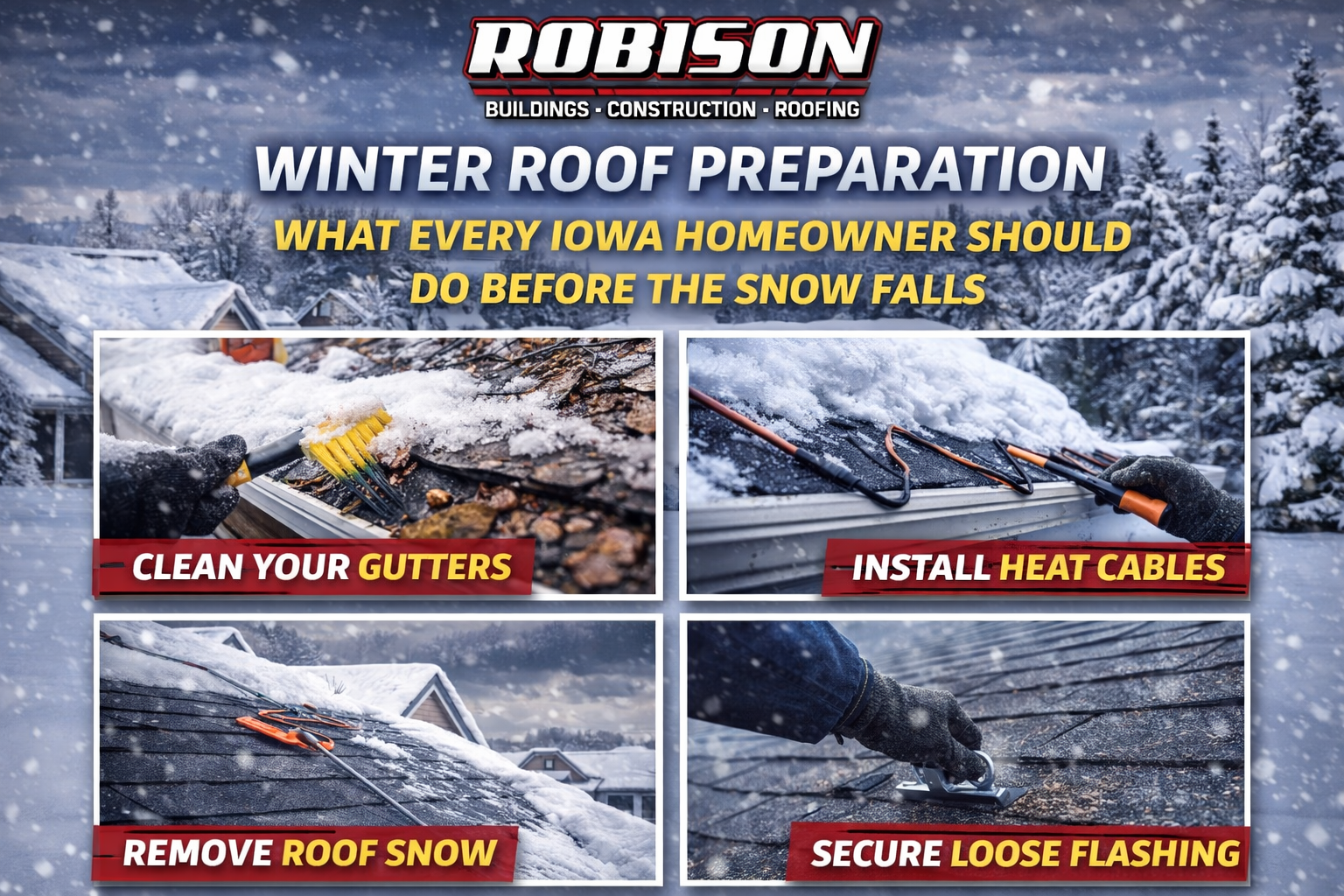
Snow and Ice
Winter storms bring:
Ice dams
Roof edge lifting
Snow accumulation stress
Freeze-thaw expansion
These conditions weaken older roofs and accelerate deterioration.
Understanding the threats helps you prepare strategically.
Step 1: Schedule a Professional Pre-Storm Roof Inspection
The most effective way to strengthen your roof before storm season starts is to get a thorough inspection performed by a licensed roofing contractor. A professional inspection reveals issues the average homeowner cannot detect from the ground.
What a contractor will examine:
Shingle integrity
Flashing adhesion and condition
Roof decking strength
Ridge and hip security
Chimney and vent sealing
Gutter support and flow
Signs of previous storm damage
Attic insulation and ventilation
Moisture or soft-spot detection
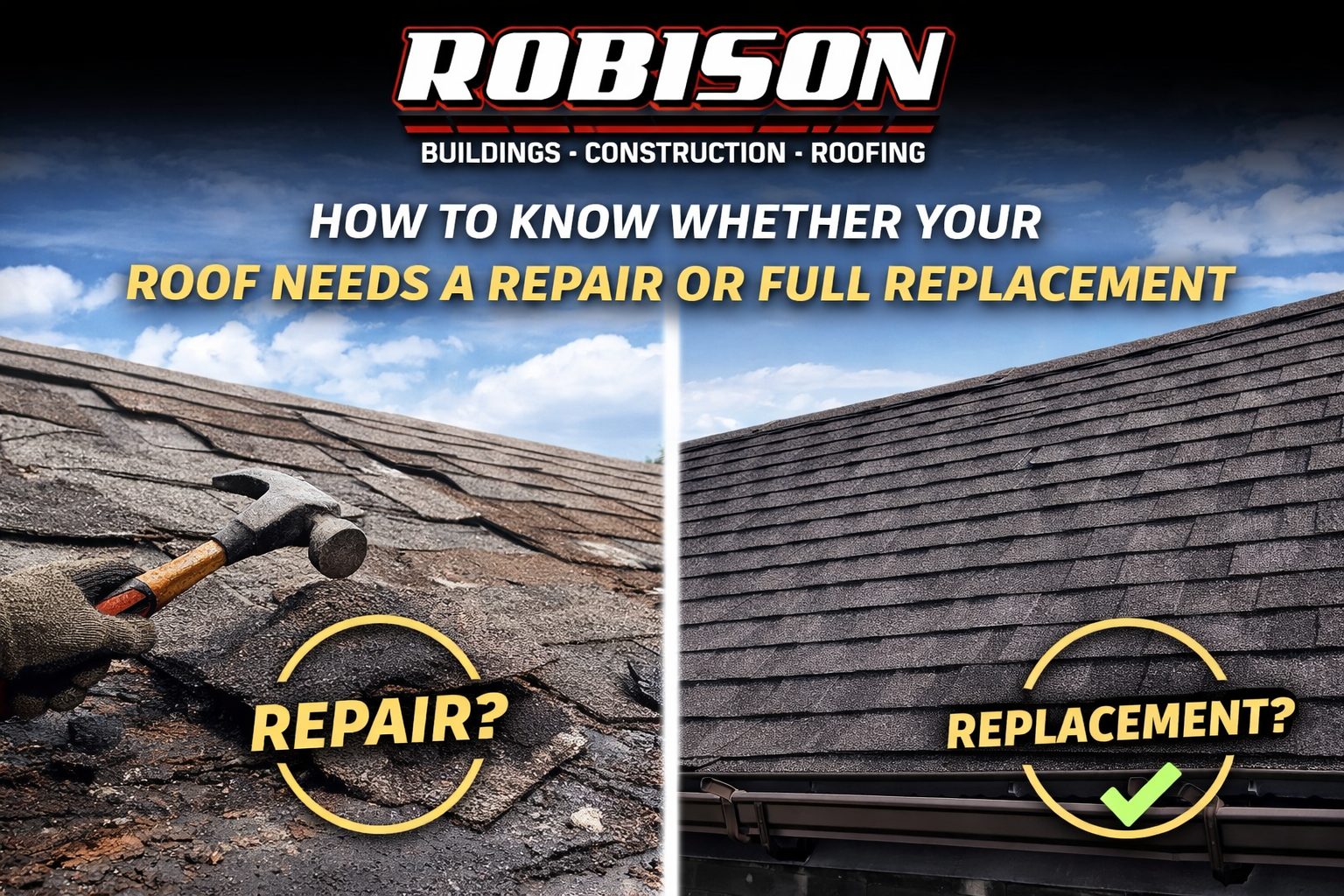
For older roofs—especially those 15+ years old—annual pre-storm inspections are essential. A roof may look fine from the outside but hide internal weaknesses.
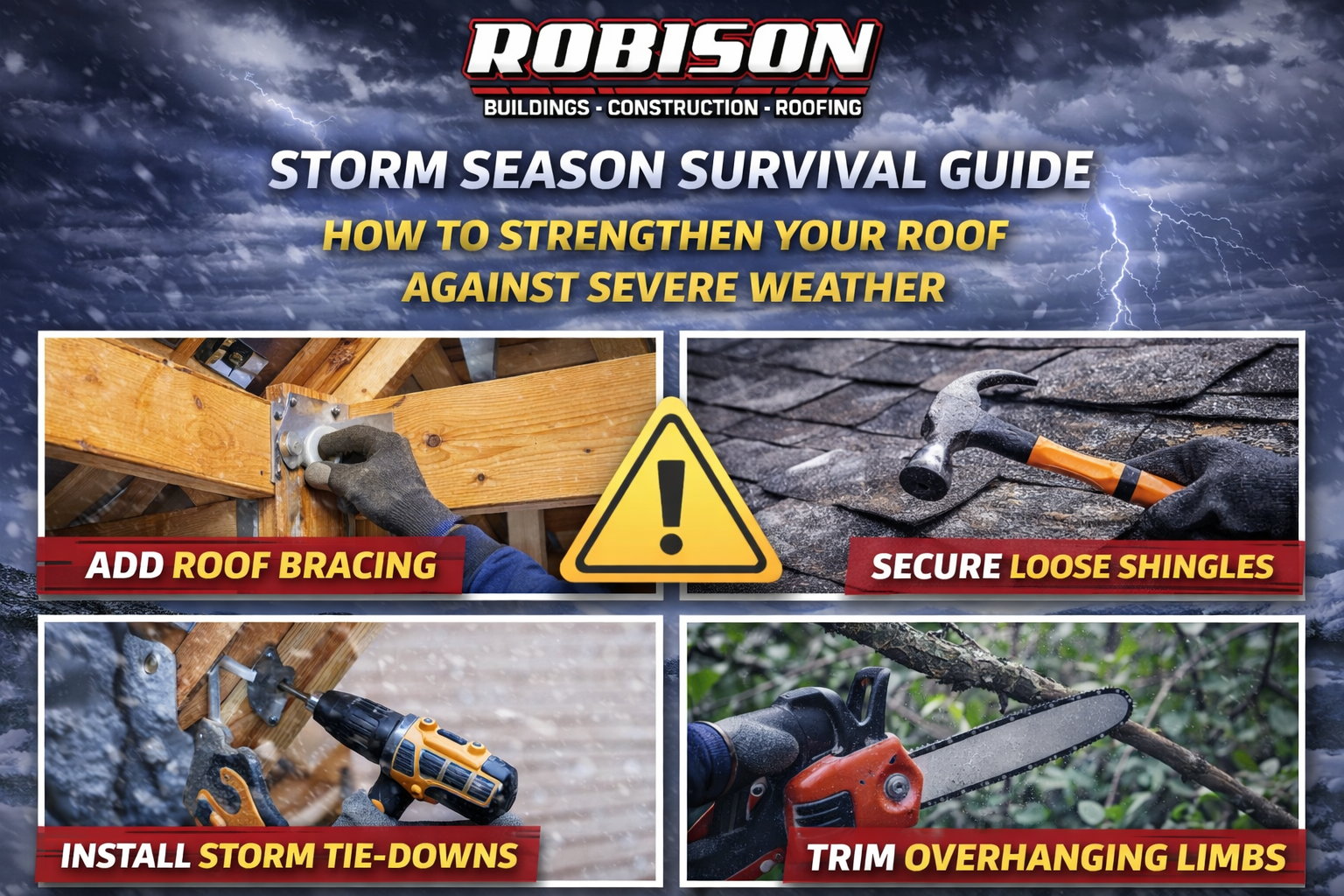
Step 2: Replace Damaged or Lifted Shingles
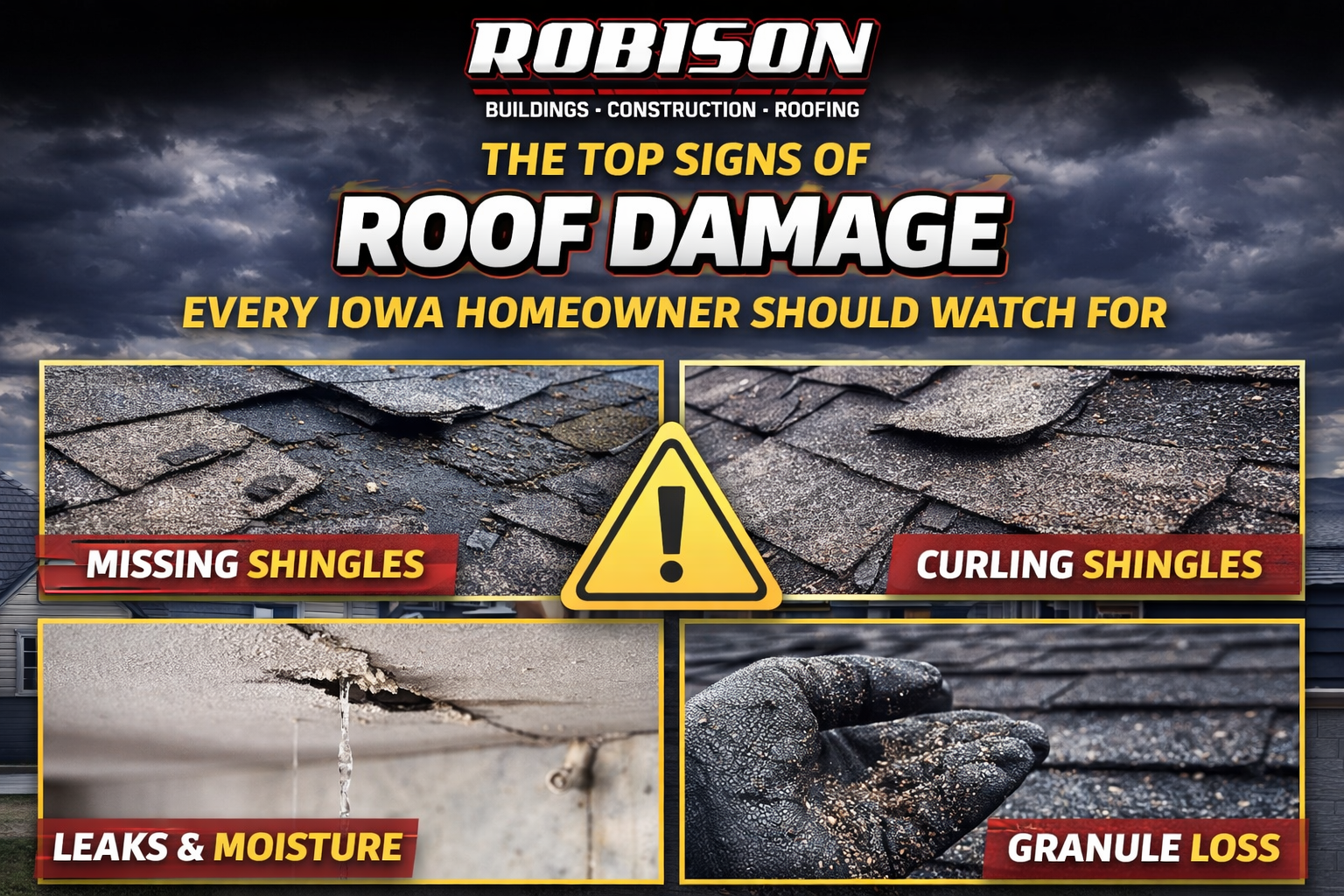
Shingles that are cracked, curling, blistering, or lifted are highly susceptible to wind damage. During storms, wind can grab the edges of compromised shingles, tearing them off and exposing the underlayment.
Warning signs that require immediate action:
Shingles bending upward
Discoloration
Bare spots with granules missing
Shingles flapping during light wind
Dark streaks indicating aging
Brittle or cracked shingles
Addressing these early prevents widespread damage when severe weather arrives.
Step 3: Reinforce Roof Flashing and Sealants
Flashing is a roof’s primary defense against water penetration at vulnerable areas such as:
Chimneys
Valleys
Skylights
Roof edges
Vents
Dormers
Flashing that has lifted, rusted, cracked, or separated from surfaces becomes a direct pathway for water intrusion during storms. Sealants around these areas may also degrade over time. Reinforcing flashing and resealing vulnerable areas before storm season protects your roof against leaks during heavy rain and wind.
Step 4: Clear and Strengthen Gutters and Downspouts
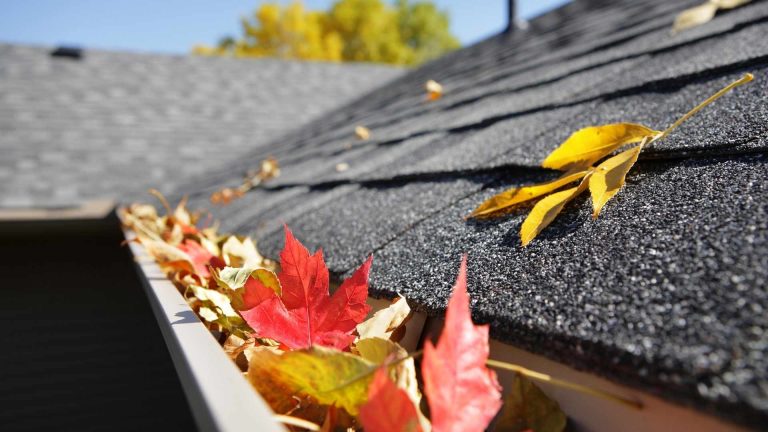
Gutters play a major role in storm protection. When they are clogged or sagging, stormwater can back up and flow under the shingles, causing major leaks.
Gutter preparation includes:
Removing leaves, sticks, and debris
Checking for sagging or detachment
Ensuring downspouts direct water away from the structure
Confirming guards or screens are secure
Reinforcing gutters with new brackets if needed
Strong gutters prevent water damage and reduce the risk of ice dam formation in winter.
Step 5: Trim Overhanging Trees and Branches
Overhanging branches are one of the biggest storm-season hazards. Heavy winds cause branches to scrape shingles, break off, or fall onto the roof.
Tree trimming benefits include:
Preventing punctures during storms
Reducing moss and debris accumulations
Lowering the risk of gutter blockages
Increasing sunlight exposure to reduce moisture retention
Trimming should be performed before spring storms or fall/winter snow events.
Step 6: Improve Attic Ventilation and Insulation
Attic conditions directly impact roof stability during storms. Poor ventilation leads to trapped heat and moisture, weakening roofing materials over time.
A healthy attic maintains:
Stable temperatures
Proper airflow
Dry, mold-free conditions
Adding or reinforcing insulation helps maintain indoor temperature and reduces strain on the roofing system. Proper attic ventilation also prevents ice dams in winter—one of the most destructive forms of storm-related roof damage.
Step 7: Secure Roof Hardware, Vents, and Accessories
Loose hardware is easily torn off in high winds. Homeowners should have a contractor check:
Ridge caps
Roof vents
Satellite mounts
Skylight frames
Solar panel brackets
Exhaust pipes
Antennas
Any loose or poorly sealed attachment becomes a risk during storms.
 Step 8: Add Impact-Resistant Shingles or Reinforced Roofing Materials
For homeowners replacing or upgrading their roof, choosing high-quality, impact-resistant materials drastically improves storm resilience. Although this is a larger investment, it pays for itself in reduced repairs and extended roof life.
Features of durable roofing materials:
Higher wind ratings
Superior hail resistance
Enhanced granule adhesion
Better underlayment protection
Longer manufacturer warranties
Robison Construction frequently installs high-performance roofing materials designed specifically for harsh weather regions like Iowa.
Step 9: Understand Your Roof’s Vulnerability By Age
Aging roofs are more prone to storm damage. Asphalt roofs typically last between 20 and 30 years depending on quality and maintenance. Once a roof reaches 15 years or older, its resilience drops noticeably, especially under Iowa’s climate.
Older roofs may have:
Weak adhesives
Deteriorated underlayment
Brittle shingles
Loose flashing
Granule depletion
If your roof is approaching the end of its lifespan, pre-storm reinforcement becomes even more important.
Step 10: Prepare a Post-Storm Response Plan
Even a well-prepared roof can sustain damage in severe weather. Having a plan ensures fast and effective response.
Your plan should include:
Knowing what early signs of storm damage look like
Checking attic and ceilings for moisture
Inspecting shingles from the ground
Contacting a local roofing company for a post-storm inspection
Documenting visible damage for insurance
Fast action reduces secondary issues such as mold, water penetration, and structural weakening.
Real Iowa Homeowner Testimonial
“I texted Matt Sunday evening regarding a wet ceiling from a roof leak. I was worried with more storms in the forecast. He came over Monday morning, inspected the roof, and confirmed the leak. His guys came over Monday afternoon and started the repairs. They were extremely polite, understanding, and hardworking. I couldn’t be more pleased with the results. Thank you very much Robison Roofing!”
This testimonial shows how fast response and expertise can prevent a small leak from becoming a major issue during storm season.
How to Tell If Your Roof Is Already at Risk
Before strengthening your roof, evaluate whether it already shows signs of vulnerability:
Missing or lifted shingles
Visible bruising or dents from hail
Discoloration or granule loss
Loose flashing
Sagging rooflines
Rusted nail heads
Interior water stains
Mold or musty attic smells
Gutter overflow after rain
If you notice any of these issues, storm season will only make them worse.
The Cost of Ignoring Pre-Storm Roof Preparation
Many homeowners take a “wait-and-see” approach to roof maintenance, hoping minor damage won’t escalate. Unfortunately, storm season is unforgiving.
Neglecting roof preparation can lead to:
Emergency roof repairs
Structural damage
Rotted decking
Mold outbreaks
Water intrusion into walls
Higher insurance premiums
Full roof replacement earlier than expected
Preventive maintenance is always more cost-effective than storm-related repair.
Why Iowa Homeowners Trust Robison Construction
As one of Eastern Iowa’s most trusted roofing companies, Robison Construction brings years of experience, proven craftsmanship, and a commitment to protecting your home from storm damage. We understand Iowa’s climate, weather patterns, and roofing vulnerabilities better than anyone.
What sets Robison Construction apart:
High-quality workmanship
Precise inspections
Honest assessments
Fast emergency response
Industry-leading materials
Knowledge of Iowa storm damage trends
We strengthen roofs, but more importantly—we protect homes.
Final Thoughts: Prepare Today to Protect Tomorrow
Storm season in Iowa is unavoidable, but roof damage doesn’t have to be. With proper preparation, expert inspection, and strategic reinforcement, your roof can withstand even the toughest weather events.
Strengthening your roof before storm season:
Protects your home
Extends roof lifespan
Reduces repair expenses
Prevents stress and safety hazards
Ensures year-round peace of mind
Whether your roof is brand new or nearing the end of its useful life, taking action now will help ensure it stands strong during Iowa’s next big storm.



Leave A Comment